
VAR Scaled Back as Premier League Releases “Football Principles”
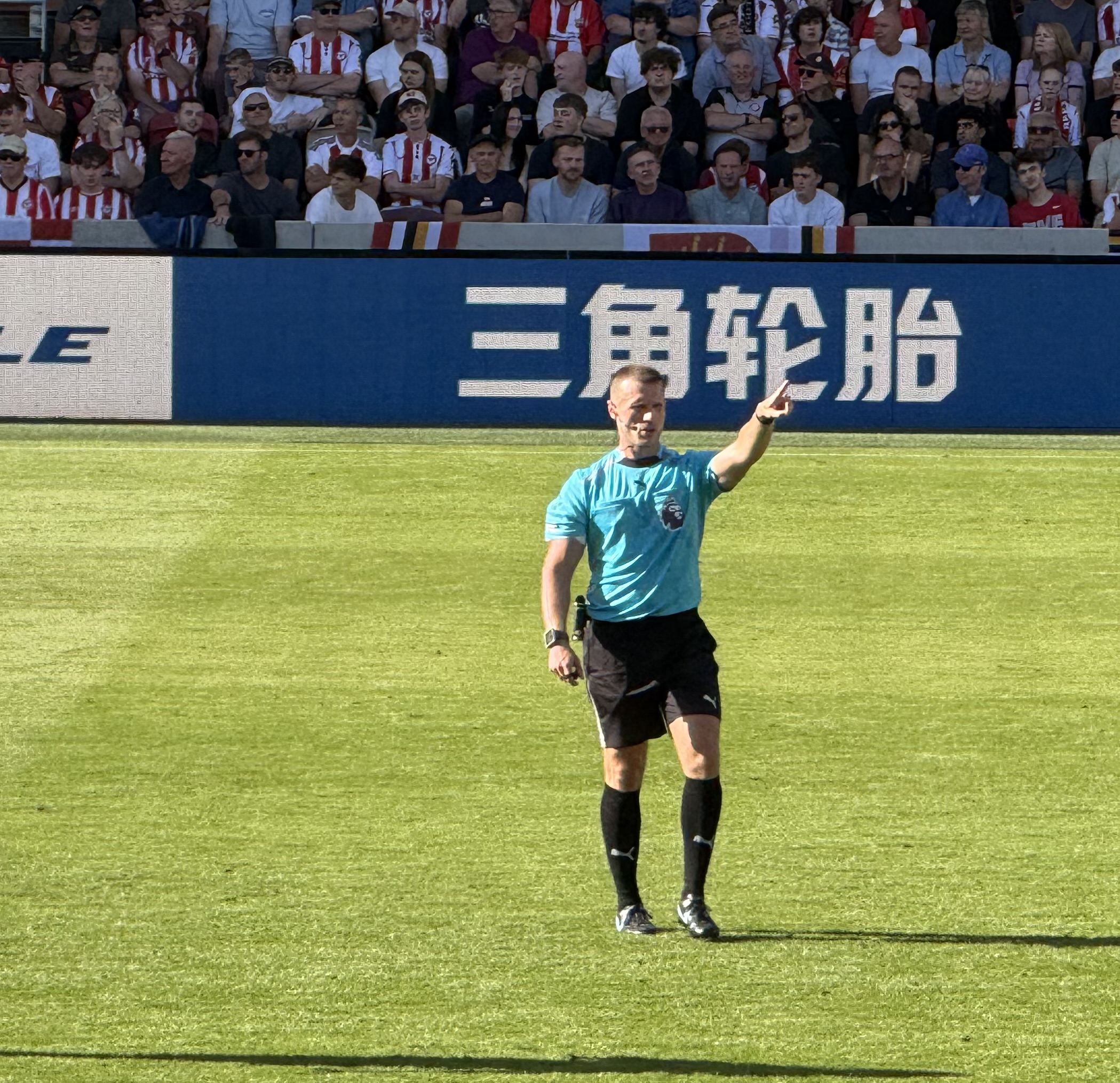
VAR and officiating played a decisive role during yesterday’s game versus Sunderland for both teams, with both teams having a goal disallowed, and Sunderland being awarded a contentious penalty. Fans may be thinking there is a lack of consistency between games, with the way the game is refereed often seeming random and confusing. For the 26/27 season, The Premier League has introduced a number of changes through its new “Football Principles” and refereeing guidance, with one clear objective: to let the game flow while putting the referee, rather than technology, back at the centre of decision-making.
VAR: Less is More
Firstly, VAR is being overhauled, with the main objective being to give authority on the pitch back to referees. The Premier League is looking to maintain a high threshold for VAR intervention, meaning the referee’s original decision should stand unless there is a “clear and obvious error”.
On top of this, the League is looking to decrease delays to the restart of play caused by VAR, focusing on more efficient use of semi-automated offside technology. This hopefully means more time enjoying those matchday moments and less time waiting for a goal to be checked and potentially disallowed. This was seen in Brentford’s game at Elland Road, where it appeared that Kevin Schade was fouled inside the penalty box, the referee made the decision to not give a penalty and not wanting to slow the game down VAR did not intervene.
However, the Premier League recognises VAR’s usefulness and has introduced a new rule allowing VAR to review a player being sent off for a second yellow card. This is specifically designed to correct a clearly wrong second-yellow-card decision; VAR cannot simply recommend a second yellow card if the referee did not award one in the first place.
For fans, this could represent a welcome change. VAR was introduced to correct clear mistakes, but there has often been a feeling that it has become too involved in the game. The new approach should mean that the referee’s decision carries more weight, with VAR acting as a safety net rather than a second referee.
A New Focus on Holding
Alongside this, referees are being told to take a firmer approach to holding, particularly in the penalty box. This has already changed the way that teams set up for set pieces. If a defender clearly grabs or holds an attacker and it affects their ability to play the ball, referees are being encouraged to take action.
This could be particularly interesting for Brentford. Set pieces have become an important part of the Bees’ game in recent seasons, and supporters will know how much preparation goes into creating and defending situations around the penalty area. A stricter approach to holding could change the way both Brentford and their opponents defend corners and free-kicks.
It could also make set pieces more exciting for supporters. If defenders know that they can no longer get away with wrestling an attacker to the ground, attackers should have more freedom to compete for the ball. This played a huge role in Brentford’s game this weekend, with Sunderland’s penalty being awarded for holding. While Bees fans may argue Isidor was also holding Lewis-Potter, the penalty was awarded because the Brentford defender was judged to be looking at the ball instead of the man.
Hair Pulling
The Premier League is also looking to clarify the consequences of hair pulling. There were several contentious incidents last season, with fans and pundits alike claiming that there was a lack of clarity and consistency surrounding the offence.
The new guidance is designed to make the punishment more proportionate. A clear and deliberate hair pull carried out with excessive force or brutality will result in a red card, while less serious incidents can result in a yellow card.
It might seem like an unusual issue for the Premier League to focus on, but after several incidents last season, the League clearly believes that greater consistency is needed. The aim is not necessarily to send more players off, but to give referees a clearer framework for dealing with incidents that previously created plenty of debate.
Time-Wasting Under the Microscope
Time-wasting is also being targeted, with several new measures designed to keep the game moving.
There will now be a five-second countdown for clearly delayed throw-ins and goal-kicks. If the time limit is exceeded, the restart can be awarded to the opposition — a throw-in changes hands, while an excessively delayed goal-kick results in a corner for the opposition.
Substitutions are also being tightened up. Players leaving the pitch after being substituted will have 10 seconds to do so. If they take longer, the incoming substitute cannot enter until a later stoppage and after at least one minute has elapsed.
There is also a change to injury treatment. If a player receives treatment or assessment on the pitch, they must leave the field and remain off for at least one minute once play restarts. This increases the previous Premier League period of 30 seconds.
There’s nothing more frustrating, as a fan, than an opposition player going down injured, receiving treatment and completely disrupting your team’s momentum. These changes are clearly intended to make that tactic less effective.
For Bees fans, that could be particularly welcome. Brentford’s intense style relies on maintaining pressure and momentum, so anything that reduces unnecessary stoppages and time-wasting should help create a faster, more continuous game.
So, Is This a Good Thing?
Ultimately, the changes appear to be moving the Premier League towards a fairly simple philosophy: let the referee referee and let the players play.
The League’s “Football Principles” place a strong emphasis on keeping the referee’s original decision unless there is a clear and obvious error, while also making VAR more efficient and reducing unnecessary delays. At the same time, referees are being encouraged to take a stronger approach to holding, simulation and other forms of gamesmanship.
For supporters, that should mean fewer interruptions and more football. Nobody goes to a game wanting to spend five minutes staring at a screen while a goal is checked from every possible angle. Equally, nobody wants to see a blatant mistake go uncorrected. The challenge will be finding the balance. If the new approach works, VAR should become what it was arguably always intended to be: a tool to help the referee rather than something that dominates the match. The referee’s decision should matter, technology should intervene when necessary, and players should be encouraged to keep the game moving.
For Brentford, that could be good news. A team built around intensity, organisation, set pieces and relentless pressure should benefit from a game that flows more naturally. If the Premier League really does manage to reduce time-wasting, speed up VAR decisions and clamp down on holding, Bees fans might find that there is even more football to enjoy.
@brentford_daily


